Dec 14
‘Coyote Ugly’ Set to Hit London’s West End as New Musical in 2027
READ TIME: 4 MIN.
A new musical adaptation of the cult film "Coyote Ugly" is set to premiere in London’s West End in 2027, produced with the original creative team behind the movie’s music, lyrics, and script and featuring new songs by songwriter Diane Warren. The production will be directed and choreographed by Tony Award winner Jerry Mitchell, who is known for staging inclusive, queer-celebratory shows such as "Kinky Boots" and "La Cage aux Folles" in the West End and on Broadway.
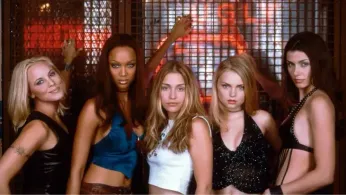
The musical draws on the 2000 film "Coyote Ugly", which followed aspiring songwriter Violet Sanford as she navigated the high-energy, hyper-stylised world of a New York City bar where female bartenders danced on the bar top. The original film was produced by Jerry Bruckheimer and Chad Oman, directed by David McNally, and inspired by Elizabeth Gilbert’s 1997 GQ article “The Muse of the Coyote Ugly Saloon,” based on Gilbert’s own experiences working at the real-life Coyote Ugly Saloon in New York.
Diane Warren, a multi-award-winning songwriter whose catalog includes hits for artists such as Cher, Celine Dion, and Gloria Estefan, wrote the film’s breakout anthem “Can’t Fight the Moonlight,” which became a global hit and a defining feature of "Coyote Ugly"’s legacy. According to coverage of the stage project, Warren will contribute a score built around her original songs along with new material for the musical, extending the story’s focus on an emerging songwriter finding her voice.
Director-choreographer Jerry Mitchell has an established record of centering queer and gender-diverse narratives in commercial musical theatre, including "Kinky Boots", which featured a leading Black gay drag performer, and the recent West End revivals of "Legally Blonde" and "La Cage aux Folles" that embraced inclusive casting and LGBTQ+ visibility. Industry reports note that Mitchell will bring a similar dance-heavy, character-focused approach to "Coyote Ugly", with an emphasis on the community inside the bar and the chosen-family dynamics among its staff.
The original "Coyote Ugly" was marketed primarily as a heterosexual romantic story set against a backdrop of female bartenders performing for a predominantly male clientele, and LGBTQ+ characters were not central to its narrative. Early commentary around the new musical has stressed that the stage version is being developed for a different cultural moment, one in which audiences and theatre workers expect more explicit inclusion of queer identities and more agency for women and gender-diverse characters.
Attitude magazine has highlighted that the West End environment into which "Coyote Ugly" will arrive is notably queer, with LGBTQ+ audiences forming a significant portion of ticket buyers for large-scale musicals and many performers and creatives openly identifying as lesbian, gay, bisexual, transgender, non-binary, or queer. This context shapes expectations that the new musical will offer space for queer-coded or explicitly queer characters among the bar staff, patrons, and performers, although specific character details have not yet been formally announced.
The real Coyote Ugly Saloon brand has expanded internationally since the 1990s, including venues in cities with large LGBTQ+ nightlife scenes such as Las Vegas and New Orleans, and has marketed itself as a party environment that attracts a diverse crowd of women, men, and queer patrons. While the franchise does not position itself as an explicitly LGBTQ+-themed venue, its presence in mixed nightlife districts has meant that many LGBTQ+ people have encountered the bar and its imagery as part of broader club culture. This history, combined with the contemporary push for inclusive casting, suggests that the West End adaptation will likely be scrutinized for how it represents sexuality, gender expression, body diversity, and consent in a high-energy bar setting.
LGBTQ+ advocates in theatre have consistently emphasized that inclusive representation depends not only on characters within the story but also on hiring practices, rehearsal room culture, and marketing language. West End commentary surrounding recent large-scale musicals has underscored the importance of casting transgender people and non-binary performers in a range of roles, not only in explicitly queer narratives. As "Coyote Ugly" moves into casting and development, it will join a slate of West End projects navigating how to authentically include queer and gender-diverse performers onstage and behind the scenes.
For many LGBTQ+ audiences, the appeal of a "Coyote Ugly" musical may lie in its potential to reinterpret a highly gendered, early-2000s property through a more intersectional lens, centering women’s agency and acknowledging the presence of queer people in nightlife spaces that earlier mainstream depictions treated as uniformly heterosexual. How the production frames community, desire, and empowerment inside the bar will likely determine whether it is received as a nostalgic throwback, a critical update, or a combination of both.
Producers have not yet announced casting, full creative team details beyond Diane Warren and Jerry Mitchell, or the specific West End venue, but industry reports confirm the planned 2027 premiere and position the project as a high-profile addition to the London musical theatre calendar. As development continues, LGBTQ+ commentators and audiences will be watching closely to see how this adaptation translates a familiar story about finding one’s voice into a production that reflects the diversity of people who make up today’s nightlife and theatre communities.