Oct 20
LGBTQ Agenda: US Supreme Court denies review of Grindr case
John Ferrannini READ TIME: 4 MIN.
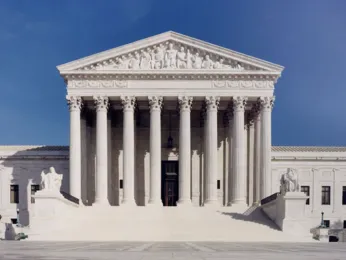
The U.S. Supreme Court opted not to hear a case alleging that the LGBTQ dating and hookup app Grindr should be held liable after a minor created an account on the app and was sexually assaulted by men he matched with on the platform. The justices issued the order without comment October 14.
John Doe v. Grindr challenged Section 230 of the Communications Decency Act, which holds that internet service providers and other platforms are shielded from liability for content posted by their users.
Shannon Minter, a trans man who is the legal director of the National Center for LGBTQ Rights, told the Bay Area Reporter that the court’s October 14 decision not to hear the case “tells us the Supreme Court is not interested in taking a case that might impose new liabilities on online services and social media.”
“There is a debate, a policy debate, about whether the long-standing rule in current federal law that gives platforms immunity for third party content should be changed, and whether those platforms should be held liable. It’s obviously an important question with enormous ramifications for online platforms,” Minter added.
Section 230, was passed in 1996 to solve a burning question from the early days of the World Wide Web – that is, are providers of online services akin to publishers (which are liable for what they print, using analog terms) or to distributors. Advocates for the growth and expansion of the internet – including authors then-representatives Christopher Cox (R-California) and Ron Wyden (D-Oregon) – felt they should be held as distributors.
While the high court later struck down much of the Communications Decency Act, Section 230 remained, though in 2018 the Allow States and Victims to Fight Online Sex Trafficking Act, which incorporated the Stop Enabling Sex Traffickers Act (FOSTA-SESTA), created an exception when it came to federal and state sex trafficking laws.
Doe’s attorney Carrie Goldberg argued in her brief seeking certiorari (review) that things have changed drastically since the 1990s.
“A few online platforms have consolidated into the nation’s largest and most powerful companies,” the brief states. “Platforms no longer function as rudimentary forums for publishing third party content but are now complex products that do more to extract Americans’ data and manipulate behavior than to publish content. Platforms now intrude into every segment of modern life – how people communicate, access media, and live their daily lives. But alongside these innovations, platforms have also become instruments of great social injury – spreading child sexual abuse material, facilitating the sale of lethal drugs, enabling suicide, and marketplaces for child exploitation like Grindr.”
In Doe, a 15-year-old boy who living in Canada who is remaining anonymous, made a Grindr account in 2019. Grindr asks users their ages but does not require verification. Over the course of four days when he was using the app, he was raped by four adult men, the brief states. Three of these men were later convicted and went to prison; a fourth is at large.
“To set up a Grindr account, Grindr asks for an email address and a birth date,” the brief stated. “Grindr claims its users must be over age 18 but allows users to choose whatever birth date and year they want, with no controls in place to detect false reporting. It … allows children to create accounts without parental permission or supervision. Grindr then matches the children with adult users for in-person, sexual encounters. In other words, Grindr serves to set up rape.”
The victim, who is living with autism and attention-deficit/hyperactivity disorder, later attempted suicide and dropped out of school, according to the brief.
Lower courts did not allow the suit to go forward, citing Section 230’s broad protections. The 9th U.S. Circuit Court of Appeals unanimously affirmed a decision from California’s central district dismissing all claims against Grindr.
The Electronic Frontier Foundation filed an amicus brief in support of Grindr when the case was before the 9th Circuit. EFF’s Aaron Mackey and Sophia Cope stated, “While the facts of this case are no doubt difficult, the Ninth Circuit reached the correct conclusion. Our modern communications are mediated by private companies, and any weakening of Section 230 immunity for internet platforms would stifle everyone’s ability to communicate, as companies would be incentivized to engage in greater censorship of users to mitigate their legal exposure.”
The pair said that it's important to remember that three of the men were prosecuted.
“This does not leave victims without redress – they may seek to hold perpetrators responsible directly,” they stated. “Importantly in this case, three of the perpetrators were held criminally liable. And should facts show that an online service participated in criminal conduct, Section 230 would not block a federal prosecution. The court’s ruling demonstrates that Section 230 is working as Congress intended.”
In its brief responding to Doe, Grindr’s attorneys argued that “Petitioner’s tragic experience reflects the criminal conduct of his attackers, not any disharmony in federal law warranting this court’s intervention.”
“When Petitioner was 15 years old, he misrepresented his age to create a user profile on Grindr, an adults-only social networking app for adult gay and bi men,” Grindr’s brief stated. “Grindr’s Terms of Service forbid minors from accessing the platform, and the app requires every user to enter a birthdate and certify that they are at least 18 years old before they can create an account.”
Minter said the case poses difficult questions.
“If we want to ask which is better for the LGBTQ community – the current rule or liabilities … it’s hard to answer.” On the one hand, maximal online freedom has allowed “maximum access to content” for LGBTQ people,” Minter said.
“On the other hand, sometimes people are preyed upon and harmed,” Minter added, such as in this case.
The court also opted earlier this month not to hear another Section 230 case, which had sought to hold Meta responsible for the radicalization of Dylann Roof, who killed nine Black Americans at the Emanuel African Methodist Episcopal Church in 2015. After being convicted in federal and state court, Roof was sentenced to death in 2017; in December 2024 when former President Joe Biden commuted nearly all federal death sentences to life imprisonment, he excluded Roof.
Doe’s attorneys and Grindr didn’t return requests for comment for this report.
LGBTQ Agenda is an online column that appears weekly. Got a tip on queer news? Contact John Ferrannini at [email protected] .